
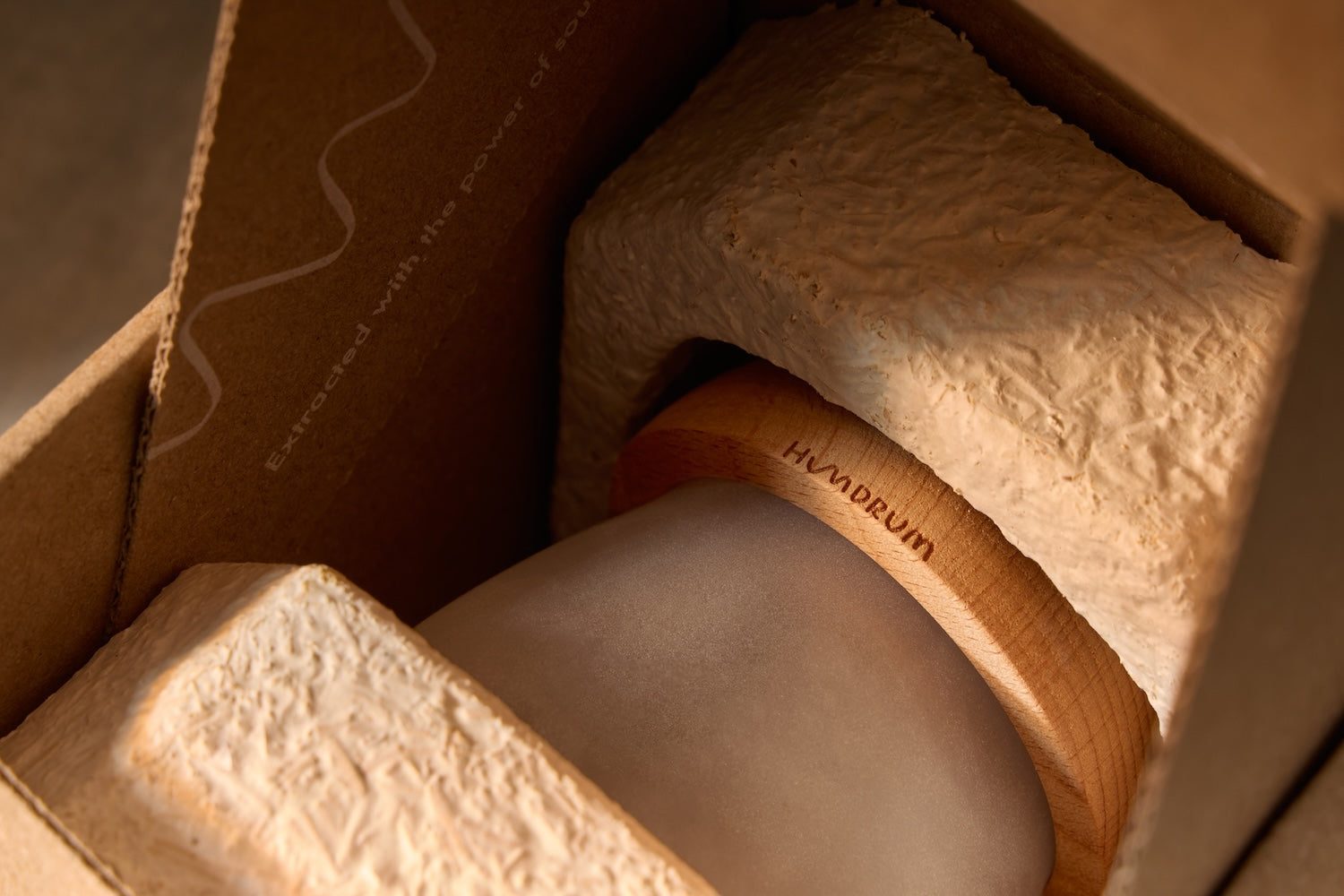
A slower,
cleaner way.
Mission
We take responsibility for every step, and we leave out everything we can.
We grow the mushrooms. We open them with sound. We sweeten the gummy with fruit bought from the person who grew it. Nothing is outsourced, nothing is masked, and little goes in that does not need to be there. Quality in, quality out; it is not a complicated philosophy, only an expensive one.
We named it Humdrum on purpose. The word means ordinary, unremarkable, dull. We chose it because the thing we are proudest of is the least impressive-sounding thing about the product: the list of what is in it is short, and most of it is fruit.
Instead of hiding the mushroom behind sugar and flavoring, we let it show. There is a savory note underneath every gummy, and we think it is the best thing about them. The fruit is chosen to meet it, not to cover it. It is slower and it costs more, and we have made peace with that.
Sourcing
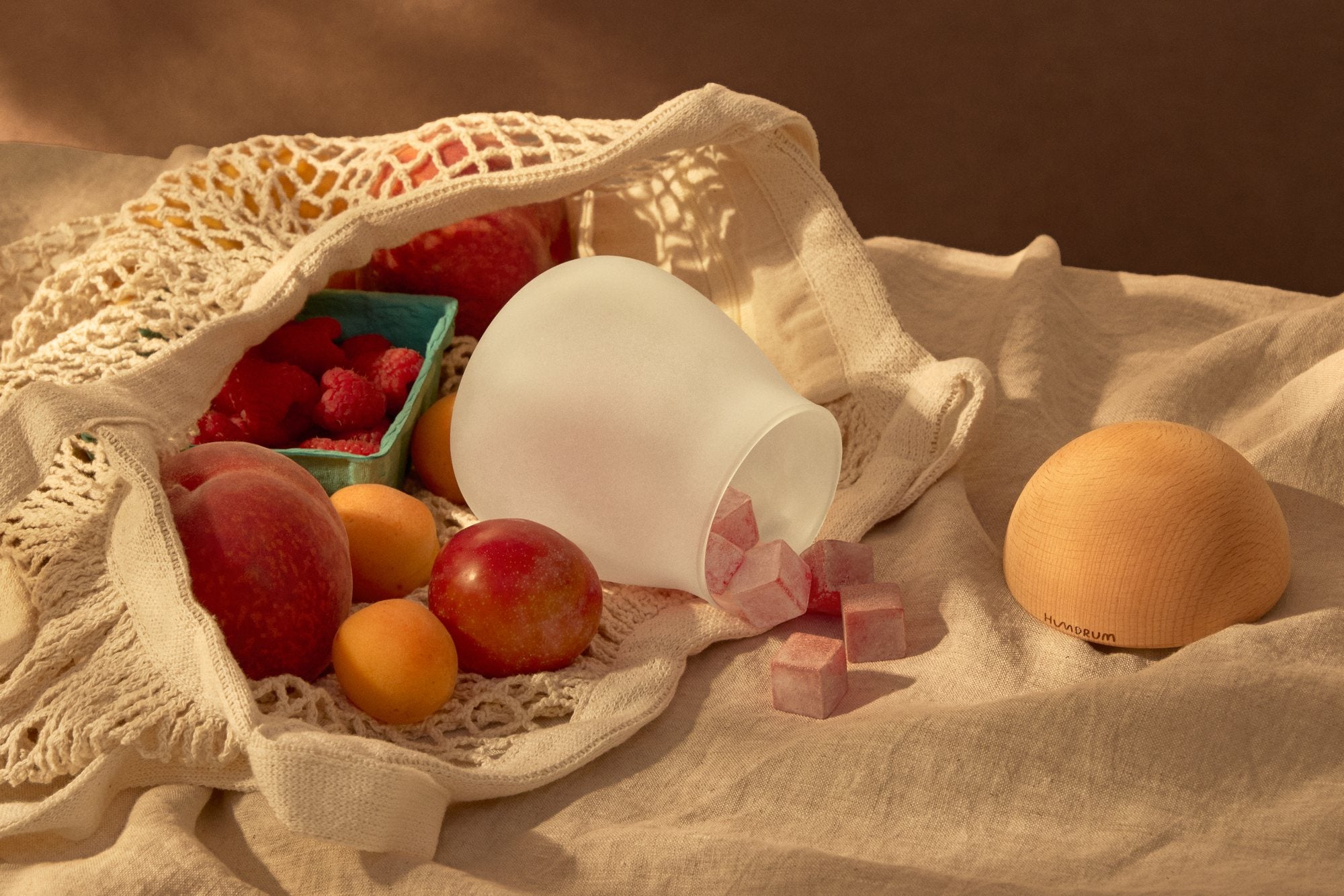
Our philosophy is rooted in the culinary habit of seasonality and the integrity of each ingredient. We source the way a good kitchen does, by talking to growers about what is extraordinary right now, and we buy the way anyone buys: at the farmers market, early, from the person who grew it. Organic, at peak ripeness, from some of California's most celebrated family farms. One variety, one grower, one county, and when a grower says the cherries are a week away, we wait a week.
Preserving that fruit into a gummy leaves us with a small record of a California season at its best, long after the season has closed. It is why a pouch of Flow State in June is not quite the pouch you had in October, and why what is in it now is always written on the label.
This month, the fruit and where it comes from:
- Albion strawberriesSanta Barbara · Flow State
- Rabbiteye blueberriesTulare · Balancing Act
- Valencia Pride mangoesCoachella · Life Force
- Triple Crown blackberriesLompoc · First Response
- Zee Lady peachesCentral Valley · Immune Revival
- Rainier cherriesSan Joaquin · Cloud Nine
Sonication
A mushroom keeps its best compounds behind chitin, a wall as tough as a beetle's shell. Swallow a raw mushroom and most of what you paid for passes straight through you. The industry's usual answer is hot water extraction: hours at or near boiling, sometimes with alcohol, sometimes twice over. It breaks the wall, and it cooks off the aromatics and degrades a share of the very compounds it is chasing.
Our process is as simple as a probe in a vessel of cold water. Sound waves make microscopic bubbles that collapse hard enough to split the cell and gently enough that the batch never warms. Beta-glucans, triterpenes and, in lion's mane, the erinacines come out with their structure unchanged, because nothing was ever hot enough to change it. No heat, no solvents, and a ten-to-one dual extract at the end of it.
Humdrum is the first mushroom gummy to use sound-wave extraction exclusively. We work with the whole fruiting body, never mycelium grown on grain, for the same reason we buy whole fruit rather than concentrate: the nuance, and most of the benefit, is in the whole thing. Sound lets us keep it, and the gummy tastes of the fruit rather than the pot.
Our farm
From spore to harvest, every mushroom in every gummy is cultivated in-house at our own farm in Los Angeles, using low-impact, sustainable methods. Nine varieties: lion's mane, cordyceps, reishi, turkey tail, chaga*, tremella, shiitake, oyster and maitake. Nothing is outsourced, and nothing arrives from a broker with a certificate attached to it.
It is the expensive way to do this. It is also the only way we could stand behind the word potency without crossing our fingers, because we know what the substrate was, what the room was doing that week, and exactly when the flush came off the shelf.
A share of proceeds goes to local food education and sustainability work in Los Angeles. It is the least interesting sentence on this website and one of the more important ones.
Cultivate & save.
Sign up for ten percent off your first order, and first word on what is ripe.